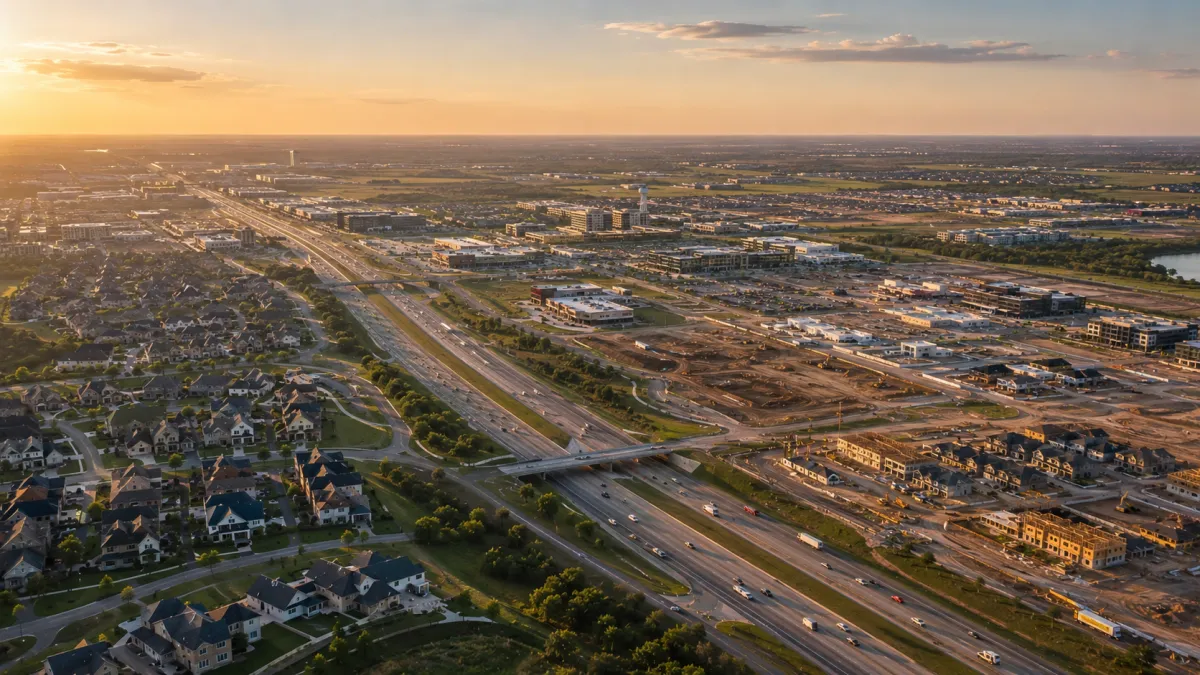
Frisco vs. Celina vs. Prosper vs. Northlake: A DFW Relocation Buyer's Guide
Most relocation buyers don't pick the wrong house.
They pick the wrong suburb.
It's the single most expensive mistake I see in this market — and it's not a money mistake. It's a lifestyle mistake. The kind that shows up six months later when your commute is 90 minutes longer than you thought, your kid's school district isn't what the marketing implied, and the "fast-growing" community you bought into is still a construction site at every traffic light.
Here's what actually matters when you're choosing between Frisco, Celina, Prosper, Northlake, Aubrey, and the other DFW growth corridors. No marketing language. No hype. Just the things that move the needle.
My job is to protect you from surprises. So let's get into it.
• • •
First: Stop Comparing These Suburbs Like They're the Same Decision
Frisco and Celina are not the same conversation. Prosper and Aubrey are not the same conversation. Northlake and Roanoke are not the same conversation.
Buyers move out here thinking they're picking between five versions of the same product. They're not. These suburbs are at different stages of growth, with different traffic realities, different tax structures, different builder mixes, and different community personalities.
Here's the framework I walk every relocation client through. It's the same one I use whether you're moving from California, Chicago, or just shifting from Plano.
The four variables that actually matter:
Stage of growth (early, mid, mature)
Commute geometry (not commute distance — geometry)
Tax stack (PID, MUD, ISD, city)
Community identity (who actually lives there)
If any one of those four is wrong for your life, the house doesn't matter.
• • •
Frisco: Mature Growth With a Premium
Frisco isn't growing anymore the way relocation buyers think it is.
Yes, the city is still active. Yes, there are still new builds. But Frisco is in mature-growth phase. The headline neighborhoods are mostly built out. Pricing reflects it. Commercial infrastructure is established. Schools are settled. Traffic patterns are predictable.
What you're paying for in Frisco is certainty. You know what the schools are. You know what the commute is. You know what your neighborhood will look like in three years. You know which restaurants will be there.
What you're paying with is dollars per square foot. Frisco runs a meaningful premium over its neighbors to the north. For some families, that premium is worth every cent. For others, you're paying extra for amenities you'll rarely use.
Frisco is the right call for buyers who value:
Stability over upside
Mature schools and infrastructure
Walkable retail (The Star, Legacy West-adjacent)
Predictable resale
Frisco is the wrong call for buyers chasing:
Land
Lower carrying costs
"First-in" community pricing
Quiet
• • •
Celina: The Boomtown That Hasn't Settled Yet
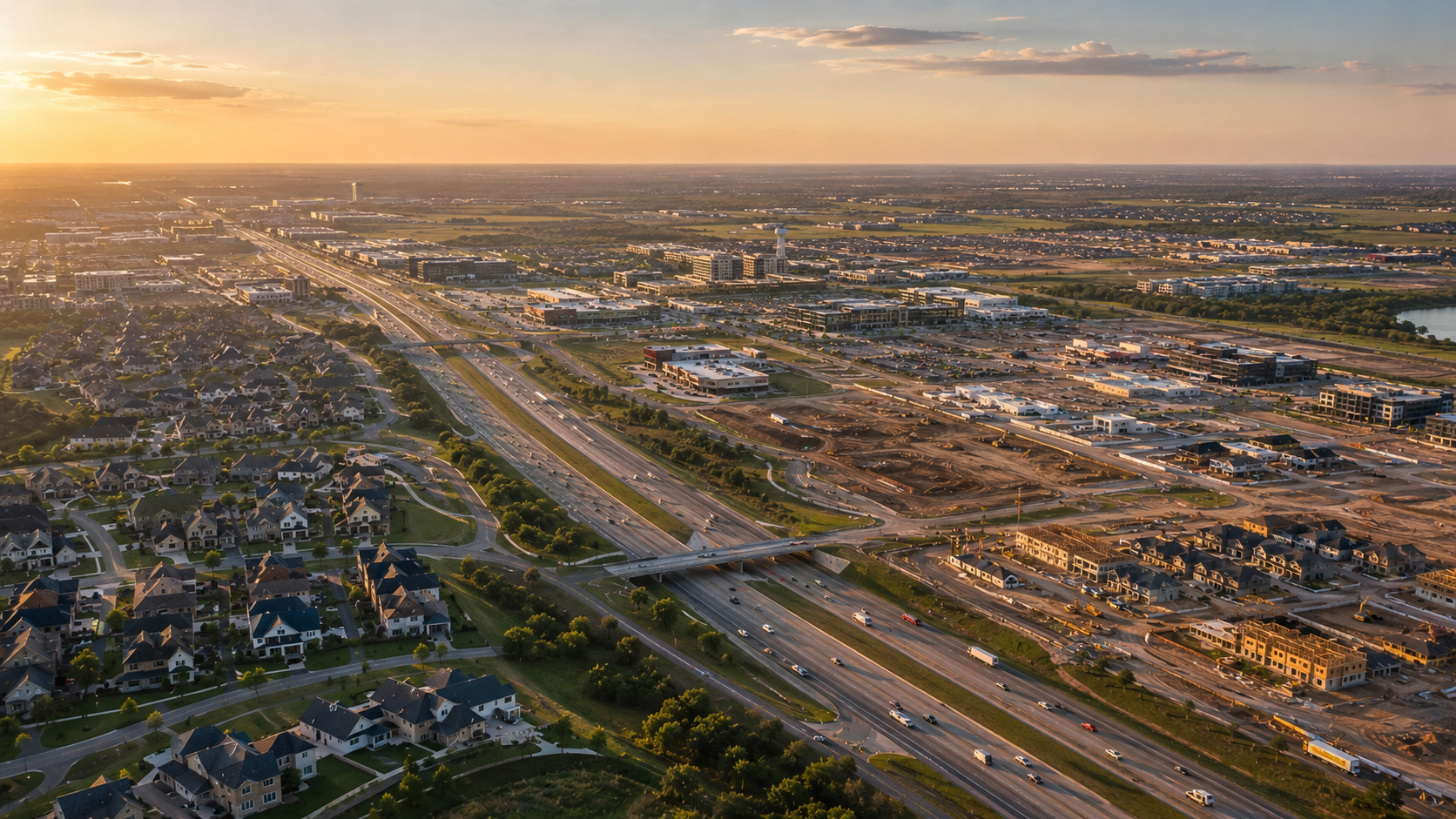
Celina is the suburb everyone's writing about and nobody fully understands yet.
The growth is real. The energy is real. The builder activity is staggering. But Celina is in early-to-mid growth phase, and that comes with realities that marketing brochures don't disclose.
Roads are catching up to rooftops, not the other way around. School capacity is being built in real time. PID and MUD assessments are layered on top of base property tax in many of the new communities, which can push your true monthly cost meaningfully higher than the listing implies.
Here's what I tell every buyer looking at Celina: do not look at the property tax line on the listing. Look at the full carrying cost. Run the PID. Run the MUD. Run the HOA. Run the ten-year forecast for tax escalations. The "great deal" you found needs to survive that math.
Celina is the right call for:
Buyers comfortable with a community still under construction
Families willing to trade short-term inconvenience for first-in pricing
People who want larger lots and newer build standards
Celina is the wrong call for:
Anyone who needs settled traffic patterns now
Buyers who can't tolerate construction noise for 18–36 months
Families who underestimate the full tax stack
• • •
Prosper: The Quiet Sweet Spot — But Read the Fine Print
Prosper sits in an interesting position. More mature than Celina, less crowded than Frisco. Strong school district reputation. Tighter community feel. Premium product mix.
The problem is that "Prosper" is being marketed as a single thing when it's really three or four different submarkets with very different realities. The Prosper closer to Frisco's energy is one thing. The Prosper closer to 380 is another. The newer master-planned communities push toward Celina-like growth dynamics with Prosper-like pricing.
What I push relocation clients to do in Prosper is get specific. Don't say "I want Prosper." Say "I want this slice of Prosper, with this school cluster, with this commute geometry, with this tax structure." That's the only way to make the decision real.
Prosper is the right call for:
Buyers who want premium schools without Frisco prices on the higher end
Families looking for community identity without small-town isolation
Move-up buyers from Plano, Frisco, McKinney
Prosper is the wrong call for:
Buyers expecting consistency across "Prosper" — you have to pick the slice
Anyone trying to find true entry-level pricing
• • •
Northlake, Aubrey, and the Northwest Corridor: The Underrated Growth Story
If you've only been told to look east of the Tollway, you're missing half the relocation map.
Northlake, Aubrey, Argyle, and parts of the 35W corridor are running their own growth story. Different builders, different ISDs, different commute geometries. For relocation buyers tied to DFW Airport, Alliance, or Las Colinas employment, this side of the metro often makes more sense than what the relocation packet recommends.
The trade-off is that this corridor is earlier in its retail and infrastructure curve than the eastern suburbs. You'll spend more time driving for premium retail and certain dining categories. But you'll often pay less per square foot, get more lot, and dodge some of the worst Tollway traffic.
The Northwest corridor is the right call for:
Anyone working west of the Tollway
Buyers who care about land and value over walkable retail
Families willing to be early in a growth curve
It's the wrong call for:
Buyers who need mature retail infrastructure today
Anyone with a daily eastern DFW commute
• • •
The Commute Conversation Everyone Gets Wrong
Most relocation buyers ask the wrong commute question.
They ask: "How far is it from this house to my office?"
The right question is: "What does my commute geometry look like at 7:45 AM and 5:30 PM, in real traffic, in real weather, with real road construction, in the actual direction I'm going?"
DFW commutes are not symmetrical. Going southbound on the Tollway at 8 AM is a different planet from going northbound at 8 AM. 380 in the afternoon is its own ecosystem. 35W has weather patterns I can predict with my eyes closed at this point.
Before you commit to a suburb, drive your commute. Twice. Once on a Tuesday morning. Once on a Thursday afternoon. If you can't drive it physically, simulate it in real time on Google Maps for a week. Look for the consistent worst-case, not the best-case.
The cheapest house with a 75-minute one-way commute is more expensive than the more expensive house with a 25-minute commute. Every single time.
• • •
What Builders Don't Tell You About Resale
Here's a quiet truth: not all of these communities will hold value the same way over the next ten years.
The early-stage communities depend on the surrounding infrastructure catching up — schools, retail, employment density. If the next community over the hill gets the better school zoning, your resale story changes. If the planned commercial corridor gets pushed out three years, your community feels different for buyers in 2028 than it does for you today.
This is one of the most underweighted factors in relocation buying. People shop the model home. I shop the ten-year picture.
Before you sign anything in a new master-planned community, ask:
What is the planned absorption rate for this community?
What are the surrounding ISDs doing with capacity?
Who is the master planner, and what's their track record?
What's the commercial pad timeline within 2 miles?
If your agent doesn't have answers, get an agent who does. This is where you avoid the surprise.
• • •
How I'd Actually Approach the Decision
Here's the workflow I run with relocation clients:
First, we map your real life. Not your aspirational life. Your real Tuesday-Wednesday-Thursday life. Where do you actually need to be? What do you actually need within 15 minutes? What do you tolerate at 30?
Second, we filter suburbs by commute geometry, not by reputation. Reputation is a lagging indicator.
Third, we layer the full tax stack and carrying cost. Not the listing tax line. The real number.
Fourth, we look at community identity. Who lives there. What the weekends look like. Where the kids actually go after school. Whether the neighbors are six-month transients or long-term roots.
Fifth — and only fifth — we look at houses.
Most buyers do this in reverse. They fall for a house, then try to make the suburb work. That's how you end up listing a year later.
• • •
Final Word: Pick the Suburb Like Your Life Depends On It (It Does)
DFW gives you more options than almost any metro in the country. That's the gift and the curse.
The gift is that the right suburb exists for almost any version of your life. The curse is that the wrong suburb also exists, and it markets itself just as well as the right one.
Don't let a model home pick your decade.
If you're navigating this decision and want a tactical, no-fluff walkthrough of the actual carrying costs, commute realities, and resale picture for the suburbs on your list — that's what I do. Mission-first. First through the door. Clears uncertainty.
That's the job.